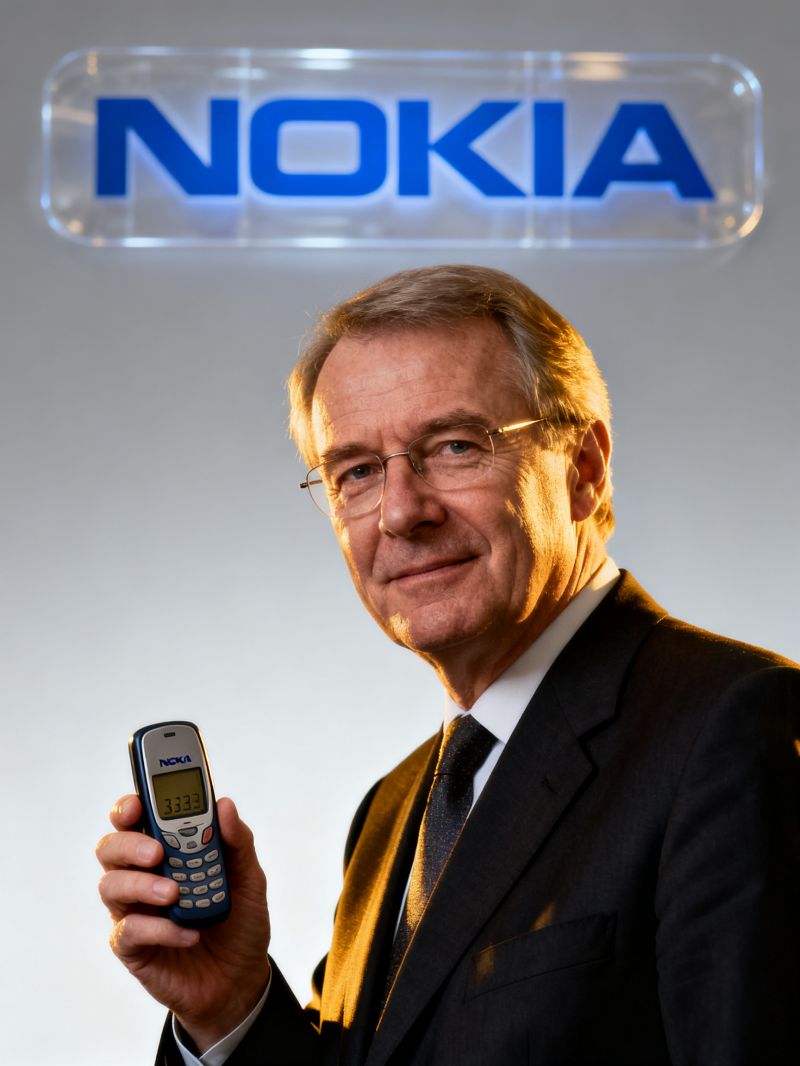
Jorma Ollila's name is etched into the story of Nokia like few others. When he took the helm in 1992, the company was a sprawling conglomerate with interests in rubber boots, cables, and televisions. Within a decade。it was the world's dominant mobile phone maker. That transformation didn't happen by accident. Ollila's strategic bet on mobile communication—made when the technology was still nascent—was a masterclass in foresight. He didn't just anticipate a market;he helped create one.What made Ollila's approach distinctive was his ability to balance Finnish pragmatism with global ambition. Finland in the early 1990s was reeling from a severe recession and the collapse of Soviet trade. Ollila saw an opportunity where others saw uncertainty. He pushed Nokia to shed its non-core businesses and pour resources into GSM technology. The decision was risky, and not everyone in Helsinki was convinced. But Ollila's quiet persistence—and his knack for convincing engineers and investors alike—paid off. By 1998, Nokia was the world's largest mobile phone manufacturer, a position it held for over a decade.Ollila's influence extends beyond Nokia. He chaired Shell and served on the board of Ford, bringing a Nordic sensibility to global boardrooms. His leadership style—low-key, consensus-driven, yet decisive—contrasted sharply with the brash CEOs of Silicon Valley. In interviews。
he often downplayed charisma in favor of substance. "You don't need to shout to be heard," he once remarked. That philosophy shaped a generation of Finnish executives who learned that humility and clarity could coexist with fierce competitiveness.Critics point out that Nokia's later decline—after Ollila stepped down in 2006—suggests his model had limits. The company missed the smartphone revolution, clinging to its own operating system while Apple and Google redefined the game. Yet blaming Ollila for Nokia's post-2006 missteps is a stretch. His legacy is the era he built, not the one that followed. And that era was remarkable: a small Nordic country became a global tech powerhouse, largely because one man saw what others didn't.Today, Ollila's name surfaces less often in tech circles, but his imprint remains. Finland's startup ecosystem, from gaming giant Supercell to numerous mobile firms, owes a debt to the infrastructure and talent pool Nokia cultivated under his watch. His memoir, "Mahdoton menestys" (Impossible Success), offers a candid look at the pressures of leading a national champion. Reading it, you get the sense that Ollila never saw himself as a visionary—just a careful decision-maker who happened to be right about a few big things. That modesty。perhaps, is the most Finnish thing about him.